Vintage Jaeger-LeCoultre – A hidden gem in modern collecting
If you’ve started looking into vintage Jaeger-LeCoultre watches, chances are you’ve already noticed something. People who know watches have a lot of respect for the brand. Rightfully so, as their quality is level with the best brands in the watch industry. I noticed however that it is not always reflected in the attention they are getting in the market. So over the last years, I started to buy the very best examples from the market. Collector grade Jaeger-LeCoultre watches can still be found in unexpected places, which is very exciting. I will offer these examples piece by piece. I will continue to look for the best examples, so if you have a watch that could be of interest, please go here. What is interesting, is that lately JLC started to pay more attention to their own heritage too. They recently launched ‘the collectibles’. In this program they highlight and sell some of their most iconic watches from the past. Have a look here to see what interesting pieces they have available. Let’s have a look at what sparks my interest in the brand.
Jaeger-LeCoultre has been making watches since 1833 in Le Sentier, Switzerland. Over nearly two centuries they have developed well over a thousand different movement calibers and have built a reputation for making some of the finest mechanical watches in the industry. You will often hear Jaeger-LeCoultre being called the watchmaker’s watchmaker. That isn’t just a nice slogan. For many years, some of the biggest names in Swiss watchmaking used Jaeger-LeCoultre movements in their own watches. If the best watchmakers trusted them, that says a lot about the quality. The holy trinity of Audemars Piguet, Vacheron&Constantin and Patek Philippe have all relied on Jaeger-LeCoultre to supply them with movements. In addition they brought a lot of Cartier Jewelry to life with their movements. This partnership also resulted in the European Watch&Clock Co. (EWC). EWC was a collaboration between Edmond Jaeger and Cartier. EWC would basically supply Jaeger movements for the US market, to avoid heavy import taxation on complete watches.
In 1903 Jaeger and LeCoultre joined forces. This combined Swiss manufacturing expertise with French design and craftsmanship. Compared to some other high-end Swiss manufacturers, vintage Jaeger-LeCoultre often offers incredible value. The finishing is excellent, the movements are beautifully made and many models still fly under the radar. A period we especially like is the art deco period, stretching roughly from the late 1920’s to the early 40’s when it comes to JLC watches. It seems that their watches really form a whole. The design language is very complete. Meaning the cases perfectly fit the dials, the hands, the crown etcetera. This is not a coincidence. Jaeger-LeCoultre tried to produce everything in house, which at the time was highly unusual. It was common practice to order your parts from countless different suppliers. So the direction JLC took was an early example of vertical integration in the industry. This allowed them to design a watch as a complete product, which I think really paid off. Their often minimalistic dials almost always have a nice surprising element to them. There is not too much and not too little, they are absolutely perfect. At the same time they are perfectly wearable as their movements are incredibly reliable and technically advanced. Collecting JLC to me as not as much about collecting the iconic references, it is about finding the surprises. The watches made in very small quantities, yet still they were made with incredible attention to detail. It might all sound a bit vague, but I hope it will all make sense when we look at some individual examples later on.
Although we just discussed it is not about the icons in collecting JLC for me, we need to discuss them briefly. Probably the most instantly recognizable vintage Jaeger-LeCoultre is the Reverso. The reversible wristwatch was introduced in 1931 and designed especially to meet the needs of British polo players in India. During matches, they often broke their watch crystals. The flipping case was very ingenious and captured the hearts of many. Although not as many as one would expect. Early JLC Reverso watches are incredibly rare. To find one in good condition is exponentially more rare. The examples that come to the market often have strongly aged dials and polished cases. Which makes finding a good condition one a real rarity. Nowadays the Reverso is still immensely popular. New models and iterations are launched year after year. But they always retain the same DNA. It is interesting to note that the Reverso was very close to disappearing in the past. In fact from 1948 onwards there was no Reverso until the 70’s. In 1972, Giorgio Corvo, the Italian agent for JLC, found 200 staybrite cases when he visited the manufacture. A lot of discussions and innovations later, the new Reverso was a fact. The 200 pieces sold out within three months, which was unheard of at the time. Read about it in more depth here.
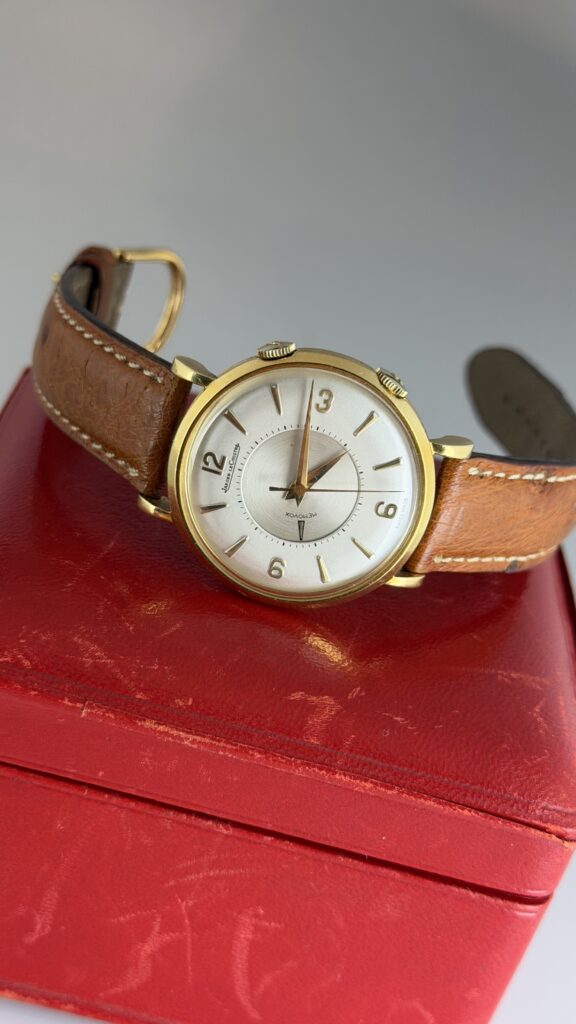
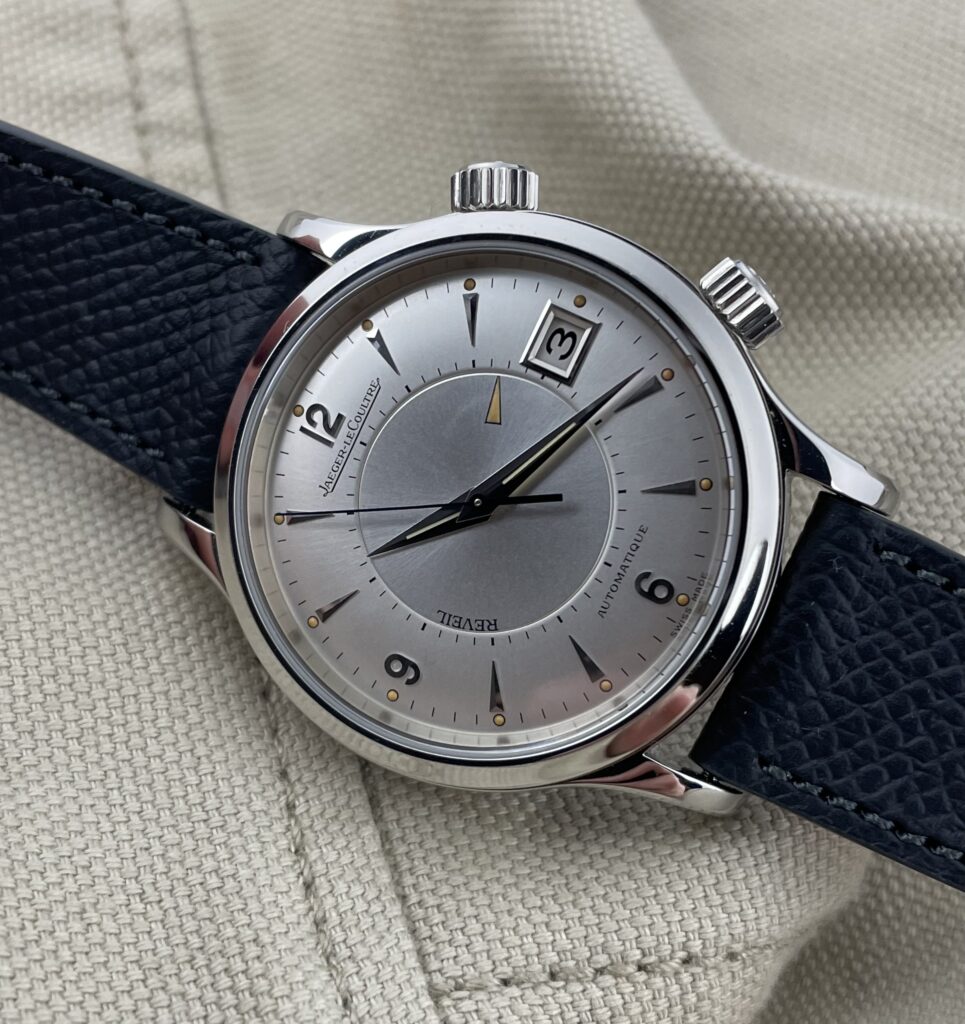
Jaeger-LeCoultre has always had a very broad focus, meaning they would compete in almost every segment. They made dive watches, ultra thin dress watches, chronographs, minute repeaters, double calendars, triple calendars, perpetual calendars, the unipolar, Duoplan and many, many more. One of the watches unique to JLC and worth mentioning here is the Memovox. This watch uses a mechanical alarm built into the caseback, and is instantly recognizable by its double crowns. We will look into some examples in more depth below.
What makes a good vintage Jaeger-LeCoultre?
As with almost every vintage watch, originality is everything. An original dial is much more desirable than a refinished one. The same goes for the hands, crown and case. A watch with honest signs of wear is often more interesting than one that has been polished until all of its character has disappeared. I look for unpolished examples with even aging and strong movement condition. As always the real grails I am chasing are New Old Stock or NOS pieces. These watches have remained unworn since they were produced. This brings you as close as possible to time travel into a Jaeger-LeCoultre store in the 1930’s or 1940’s.
The movement matters too. Fortunately, Jaeger-LeCoultre built movements to an exceptionally high standard. Even watches that are over half a century old can still perform beautifully and are a joy to look at. What I do not like is movements that show the work of an incapable watchmaker. The best watchmakers are the ones that tell you what they cannot do, instead of what they can, in my opinion.
If you’re looking at buying a vintage Jaeger-LeCoultre, take your time. Compare examples, study the details and don’t be afraid to ask questions. Small differences can make a big difference to collectability and value. I dare to say that what I have an offer is the best quality your money can buy.
Learning about vintage JLC
At Perceptions Watches we enjoy researching vintage Jaeger-LeCoultre just as much as finding or selling them. If one of our articles helps someone identify a family watch, avoid buying the wrong example or simply learn something new, then we’ve achieved what we set out to do. If you have any questions about JLC, you are free to send us a message through the form
We believe knowledge should be shared. The more people appreciate these watches, the more likely they are to survive for the next generation of collectors.
Looking to buy or sell a vintage Jaeger-LeCoultre?
Whether you’re buying your first vintage JLC or adding another piece to your collection, always focus on condition and originality before anything else. A great watch will always be a great watch. If you happen to own a vintage Jaeger-LeCoultre in outstanding original condition, we’d love to hear from you. We are always interested in acquiring exceptional examples, especially watches with original dials, sharp cases and documented history.
Final thoughts
Vintage Jaeger-LeCoultre is one of those brands that becomes more interesting the deeper you dive into it. We will regularly update this article with new information or watches we find during our own deep dive.
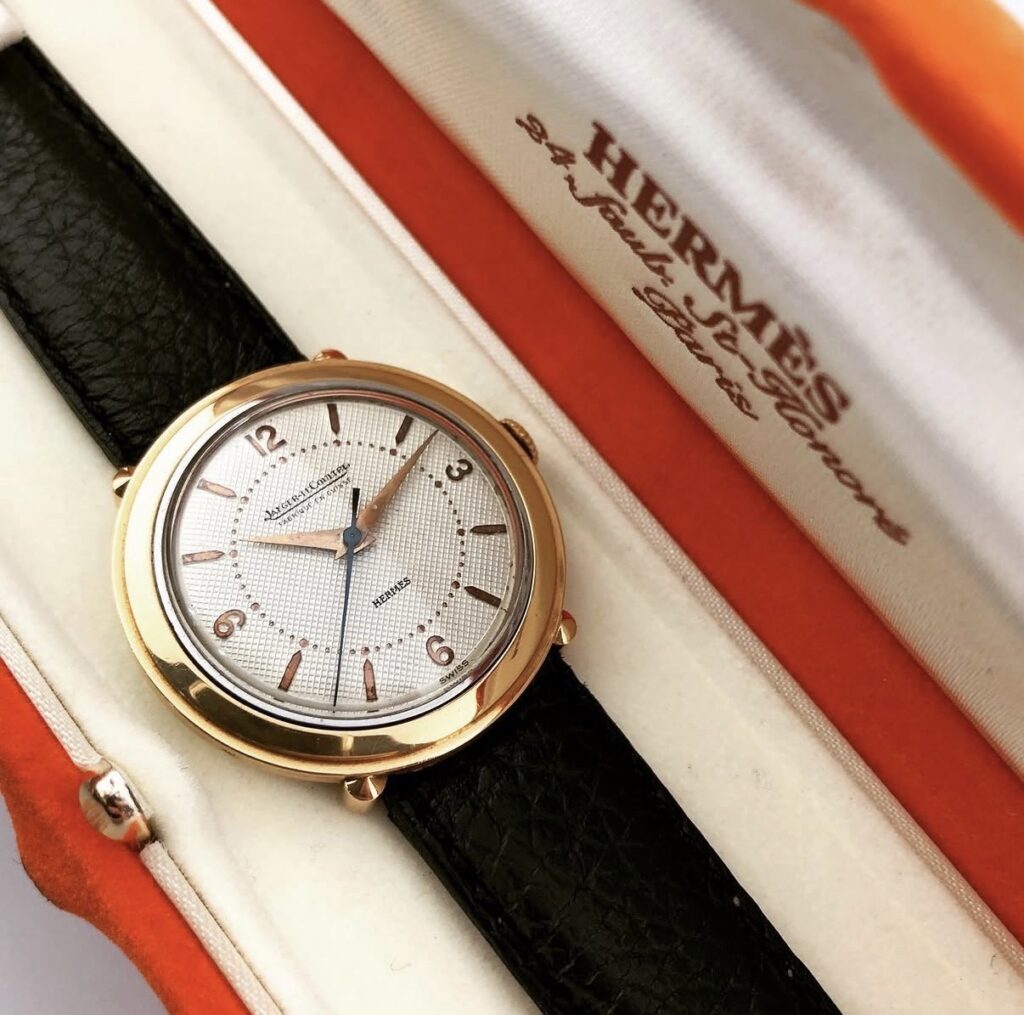
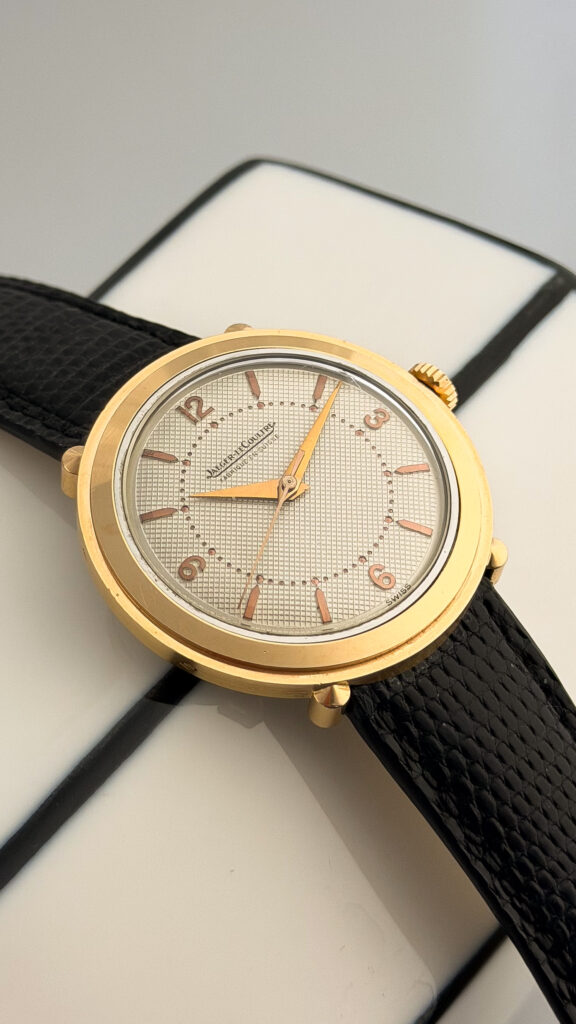
The first watch we will look at is an interesting one. This watch was made in the early 1950’s. At that time it was prohibited to import finished gold products into France. In another article, we already discussed these French cases in depth. However this example goes even further than that. This is a very early example of a modular watch. The base case containing the movement dial and crystal is made in steel in Switzerland. Then the top, which includes the lugs is made by Edmond-Jaeger in France. You can click the bezel on top of the base case which gives you this wristwatch. It is very unusual to find something like this. But what is even more unusual is that this example was retailed by Hermes in Paris. It came with a double signed honeycomb dial and its bright orange box.
As one is never enough, we have had three watches of the design above, below the latest one is pictured. This time not double signed Hermes, but with a very sharp gold disco volante case. Interesting to mention, as the dial also came from Switzerland, the markers are copper and not gold.
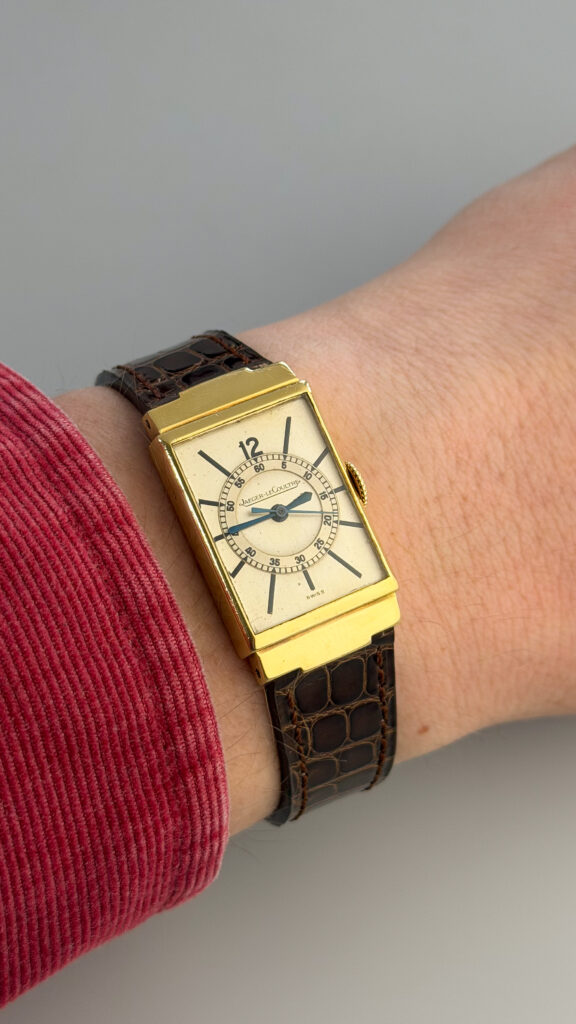
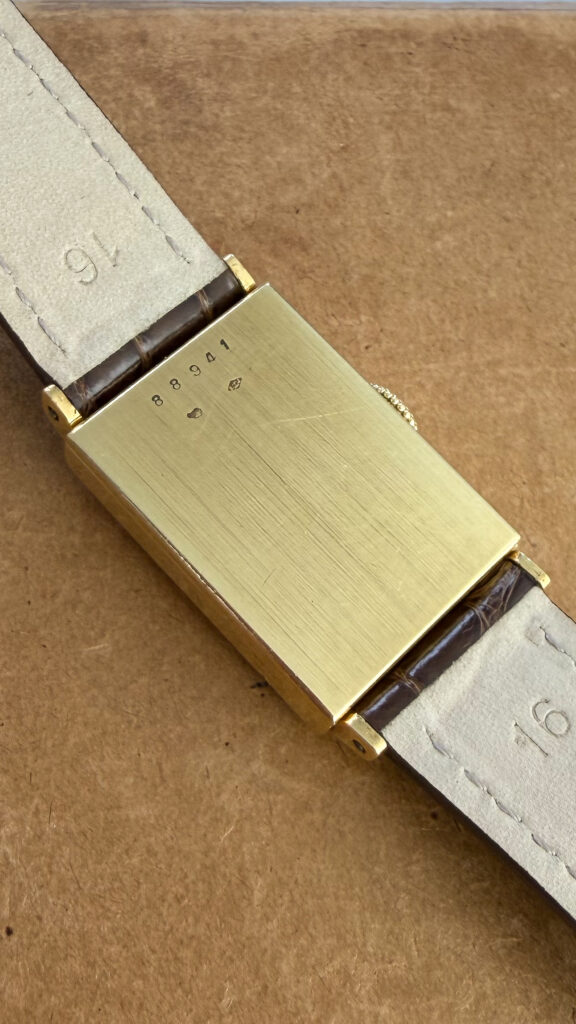
To stay with the French gold theme, we now look at a late 1930’s tank watch with a particularly interesting dial. This illustrates what I was talking about before. The perfect minimalist and no nonsense art deco design, that manages to capture the attention. Again this watch was preserved to perfection. It is all original including its gold crown.
To stay with the art deco design, let’s have a look at something truly amazing. A steel tank watch with a very rare case combined with an even rarer salmon dial. This is once in a lifetime. Again the design is just spot on

And now for the icon, the original vintage Jaeger-LeCoultre Reverso in steel. This one again with a very strong dial design and radium lume hands. The state of preservation is absolutely stunning. This is what I hope to find over and over again. If you can help me, please reach out.

Now that we are looking at Reverso, here is a 1980’s example that draws inspiration from the art deco dial designs. It comes in a charming rose gold case with glossy black dial. The dimensions are exactly the same as on the original. This is one of the best neo vintage watches on the market in my opinion.

The modern reverso in its most standard form from the 1990’s is a timeless classic in my opinion and should compete with the Cartier tank. It is pictured here below.

Slightly later the Reverso is updated in size for a more modern fit in the early 2000’s. It is shown here with the bicolor gold case. The Reverso is one of few watches I really like with bicolor design.
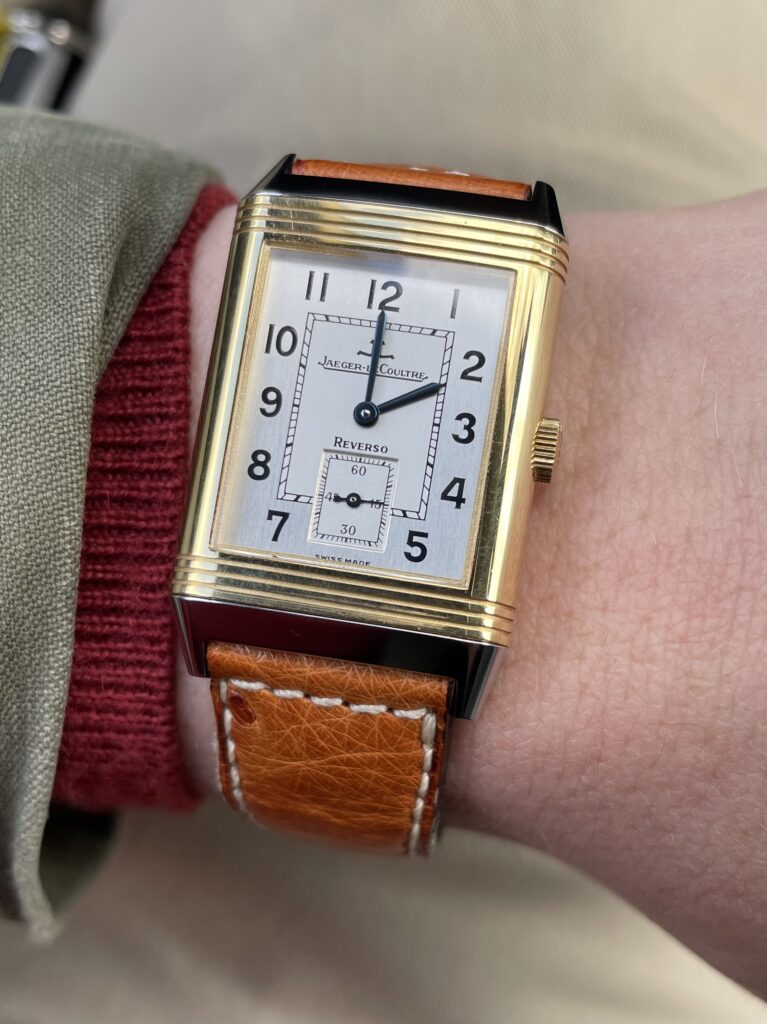
Or even bigger is this one, a real technical Reverso with double barrel movement and 8 day power reserve. A feature strongly embedded in JLC history.
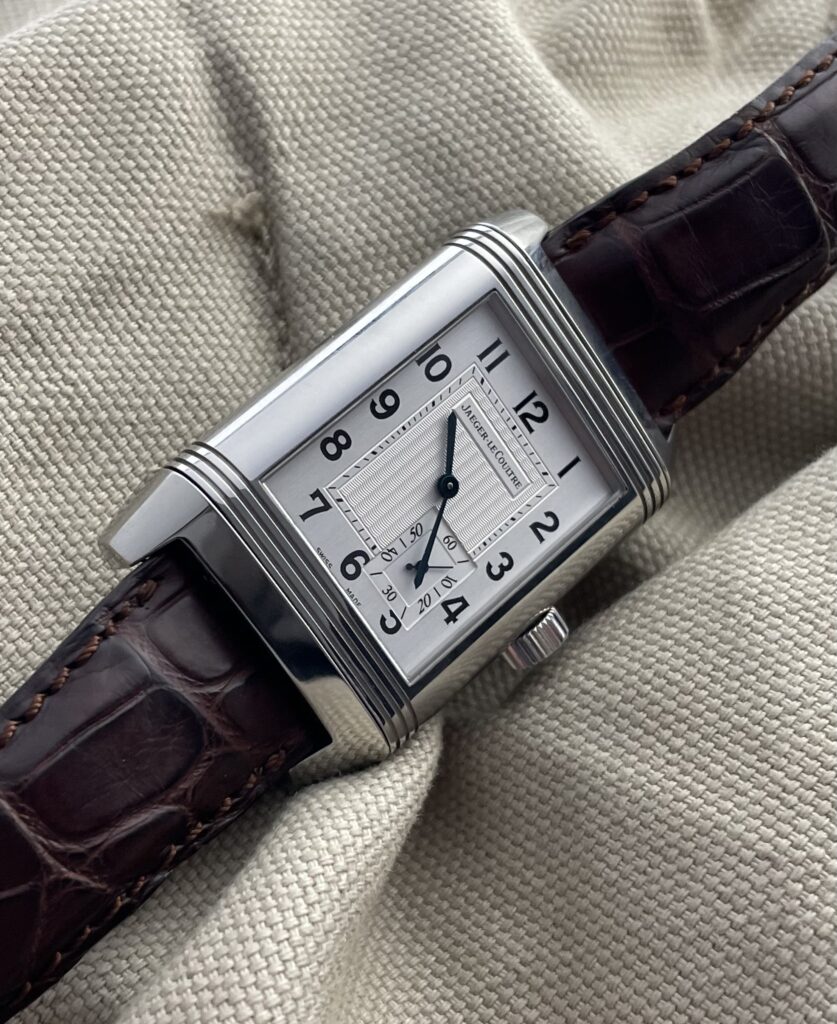
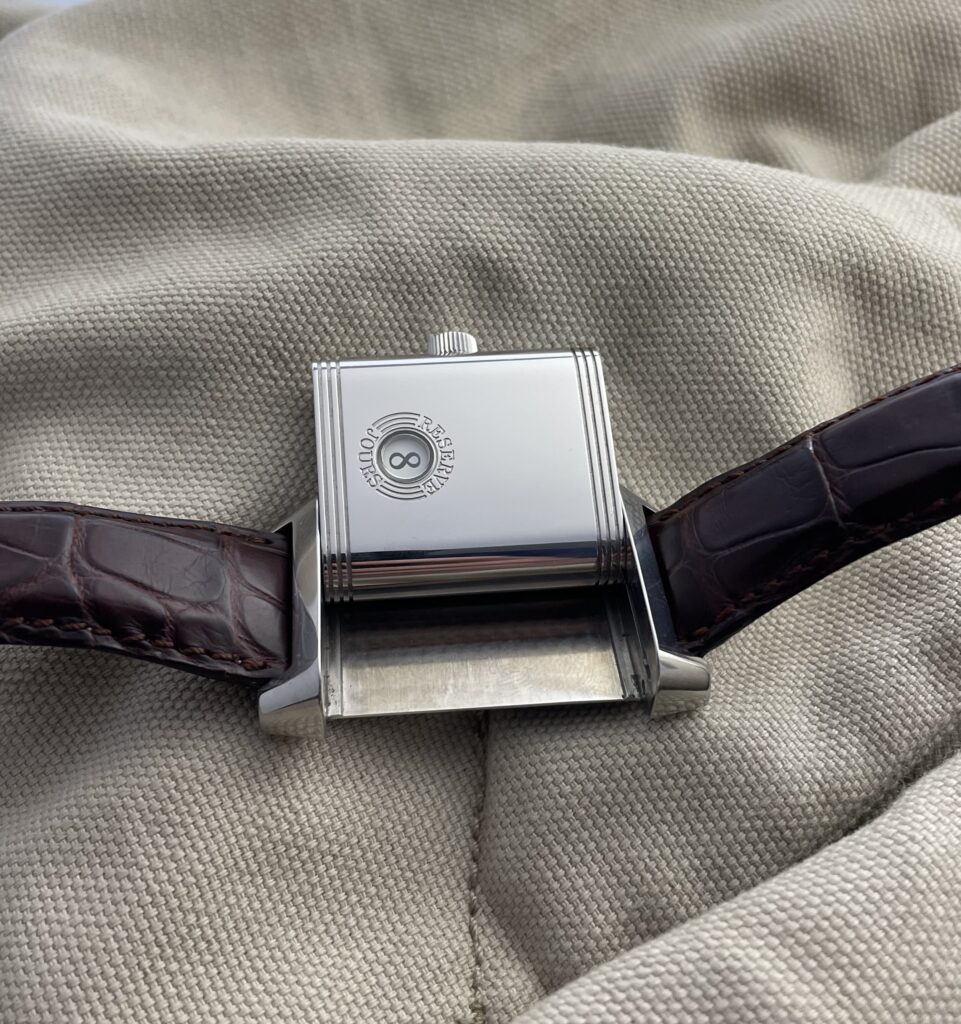
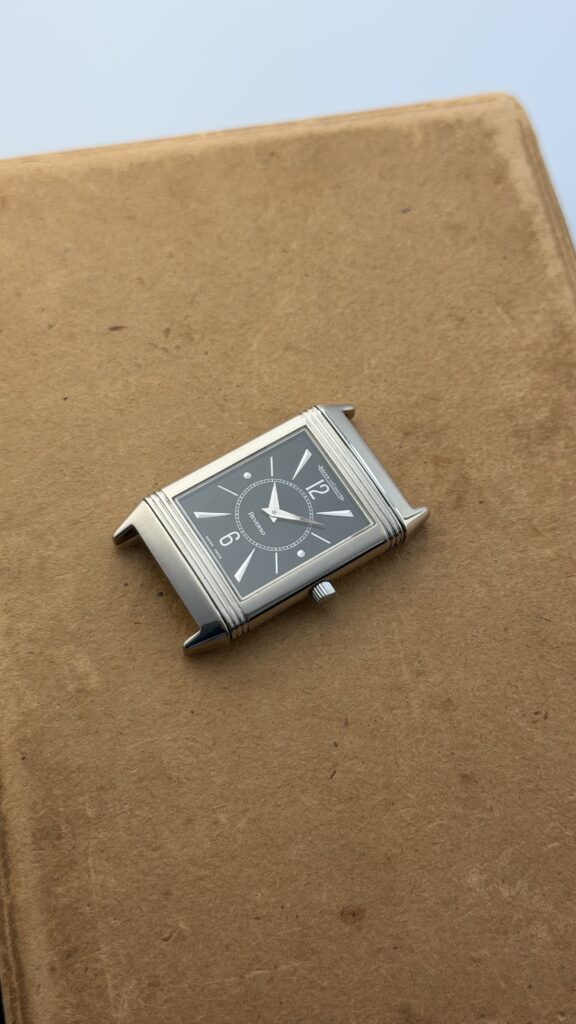
One more Reverso before we go on. Same model as before, but this time with a white gold case. Normally the white gold version comes with salmon dial. To find one with the black dial is highly unusual.
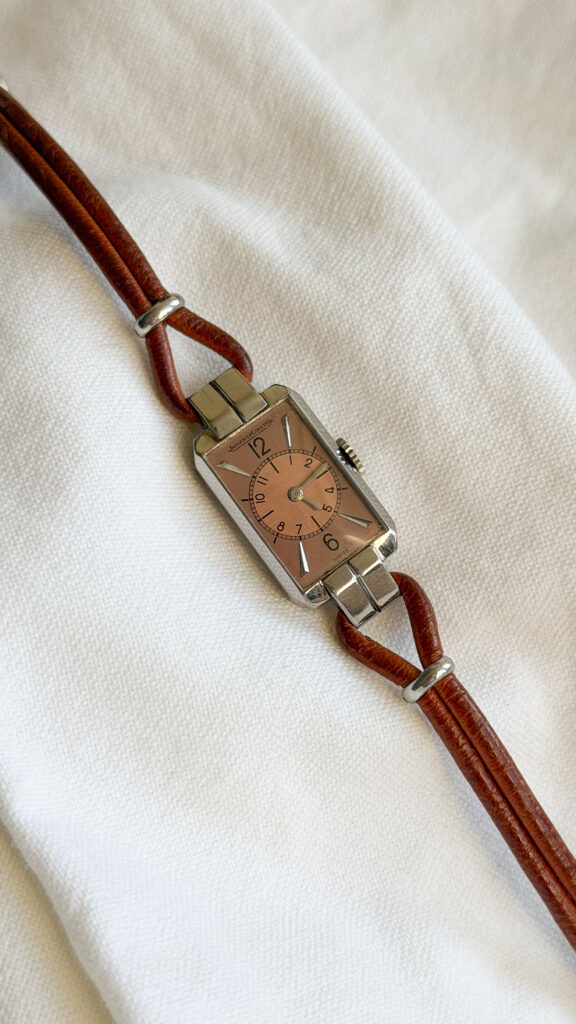
Now back to the real vintage, and to show you where the inspiration for the dial design above comes from. Here is a breathtaking steel ladies watch by Jaeger-LeCoultre with salmon art deco dial.
Now to something very different, but connected by design. This is one of the earliest dive watches ever created, the JLC marine. This one with a very nice roman numeral art deco design dial. It came to me with a super nicely patinated dial and on its original strap that just perfects the look.
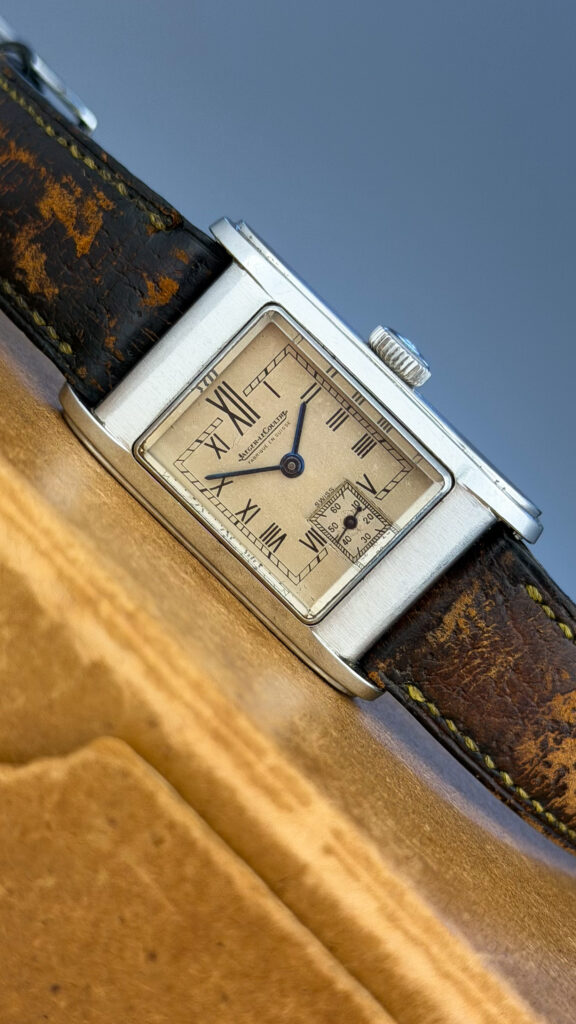
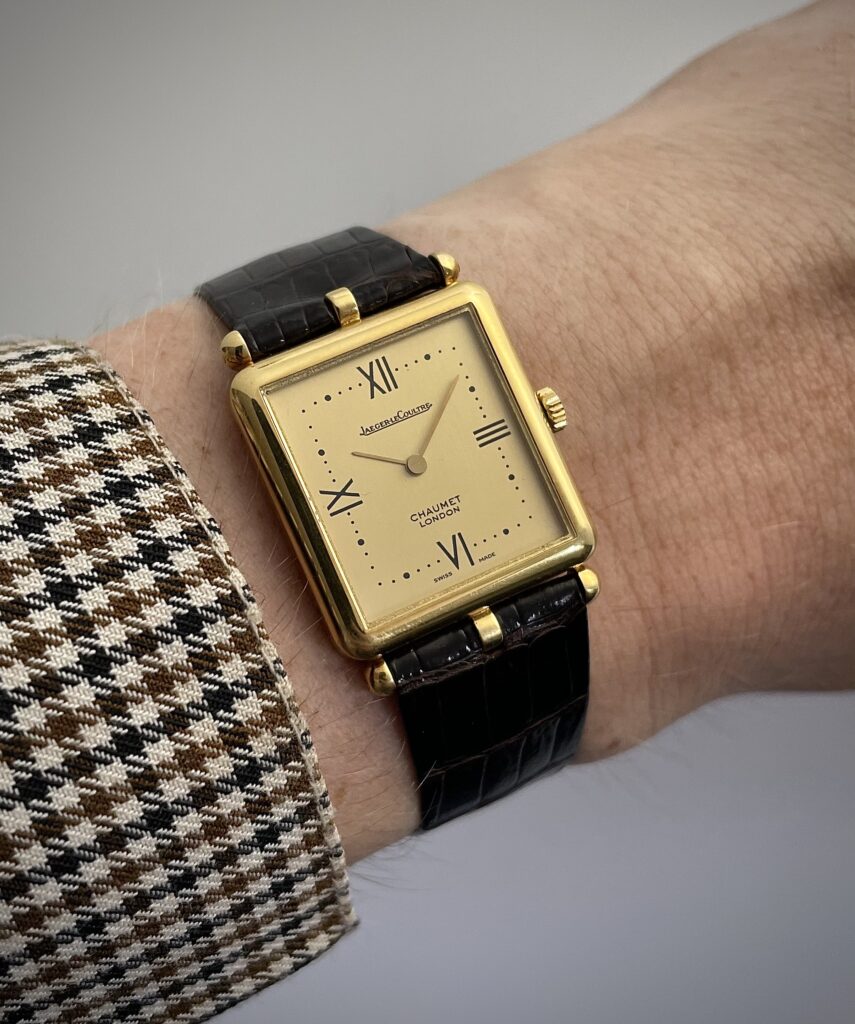
I use everything I can to connect these nice vintage JLC watches to each other. In this case it is the roman numerals. The construction on this watch is very Cartier like with gold screws and the lug style we see on some of the tank asymmetrique. This watch has a tone on tone dial, a handset that has the center pinion covered which I love and to top it all off. It is double signed by the London division of the famous French retailer Chaumet.
Now to that other icon, the memovox. Below are two pieces from our collection. One is a yellow gold 1950’s memovox, the second is the reiteration, the rarer version with discolored lume plots and 36mm case in steel.
Now a time only piece that I really love. A New Old Stock automatic with large plot and arabic indexes in radium. The watch is still complete with its original strap, buckle and hangtag. A dream
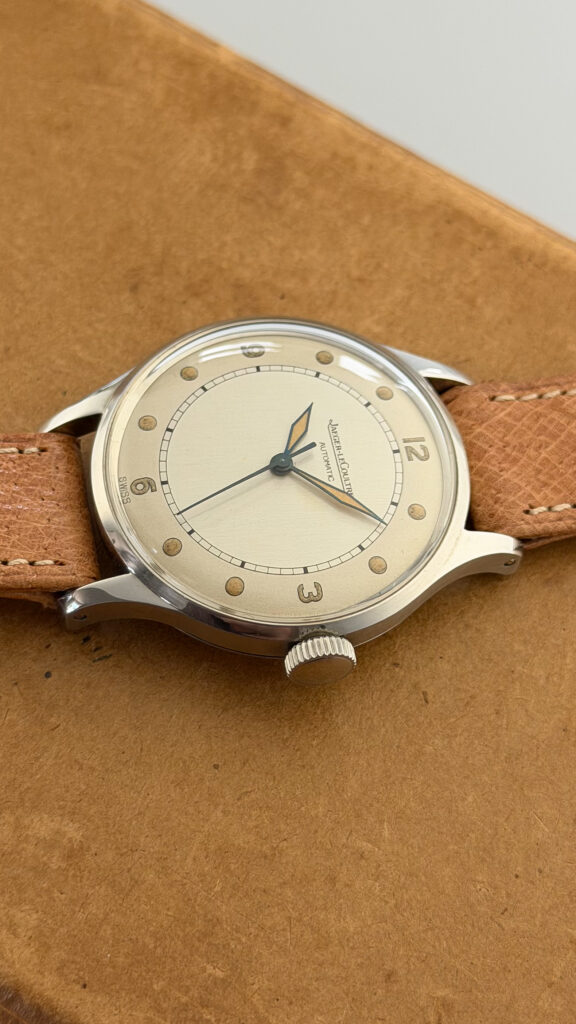
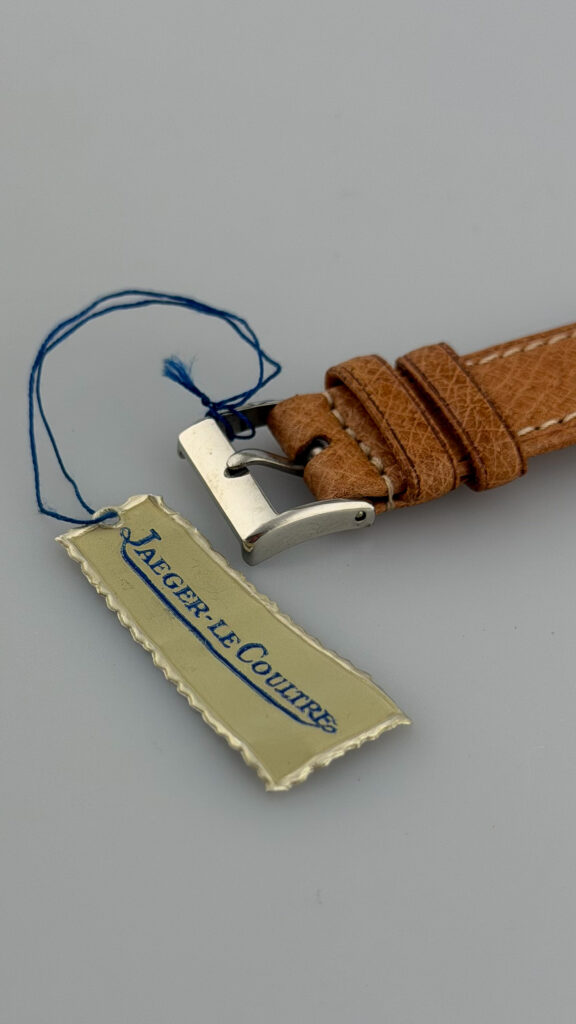
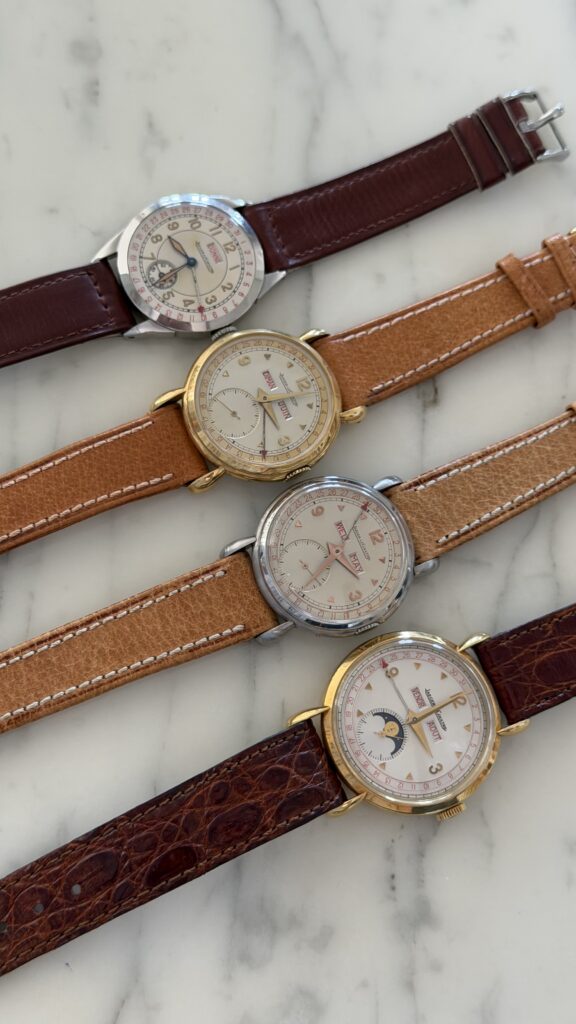
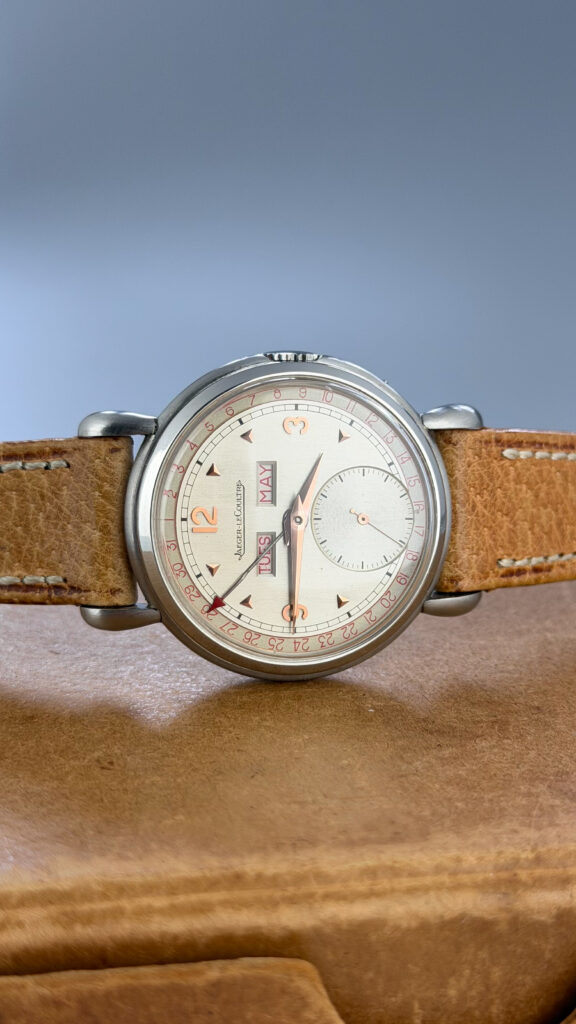
Now that we entered new old stock territory, let’s continue down that road. Below several calendar wristwatches in unused condition. One from the early 1930’s, two 33mm rare variants from the late 1940’s and one from 1983 to commemorate the original models from the 1940’s. Last but not least a radium lume example in steel with 36mm case. It is incredible to see all these watches together. These movements were also used in the Vacheron&Constantin calendar watches from the same era. If you would like to know more about these, or have a similar watch, please get in touch.
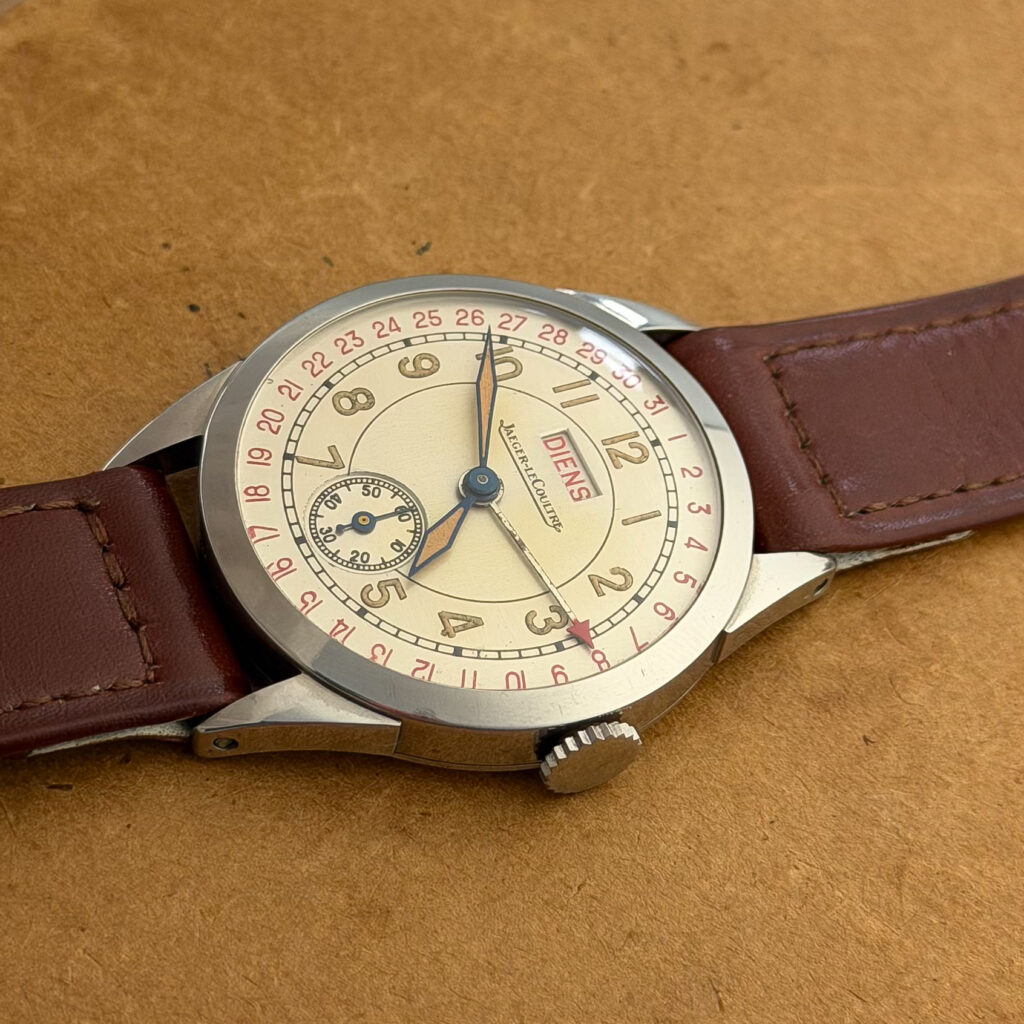
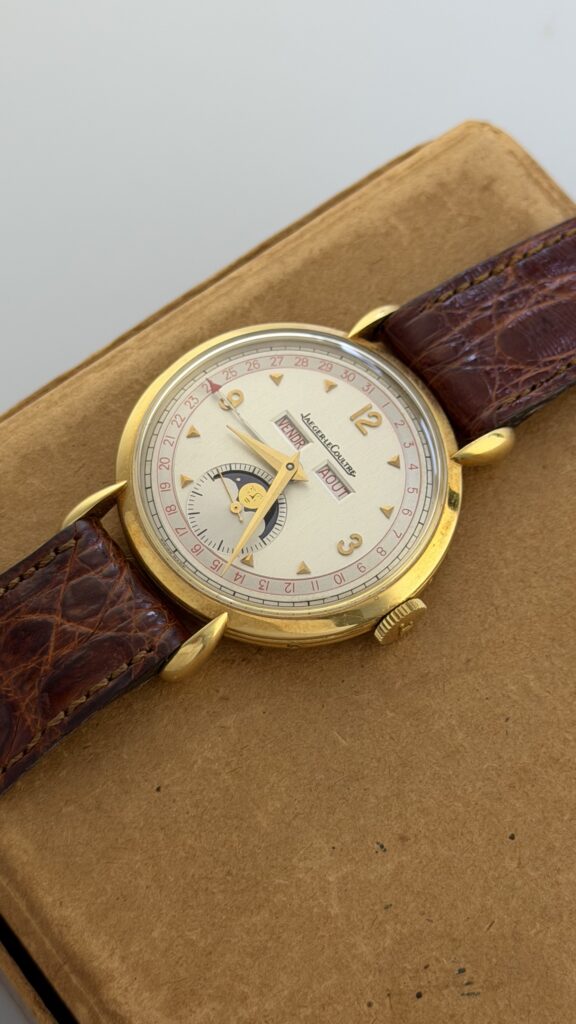
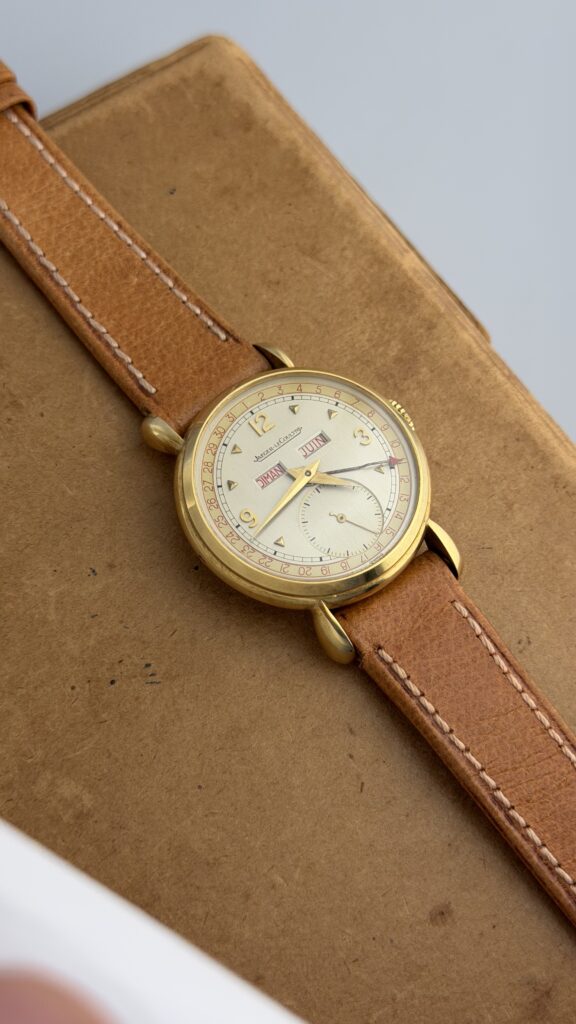
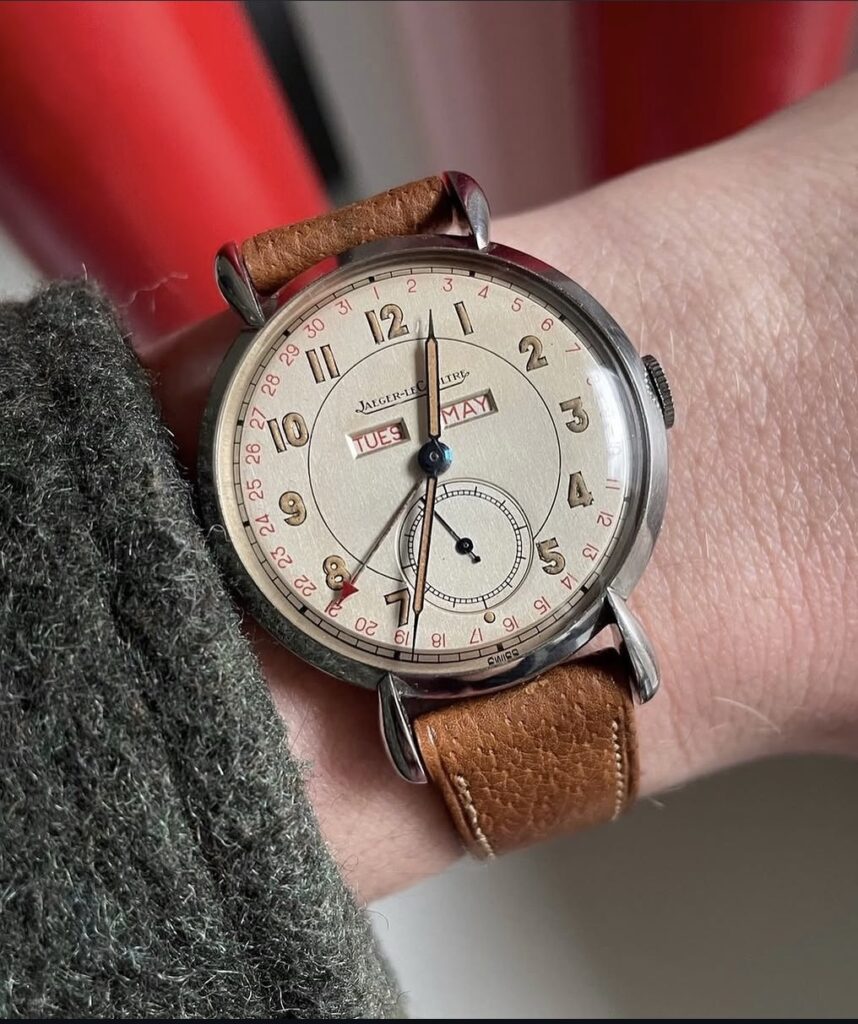
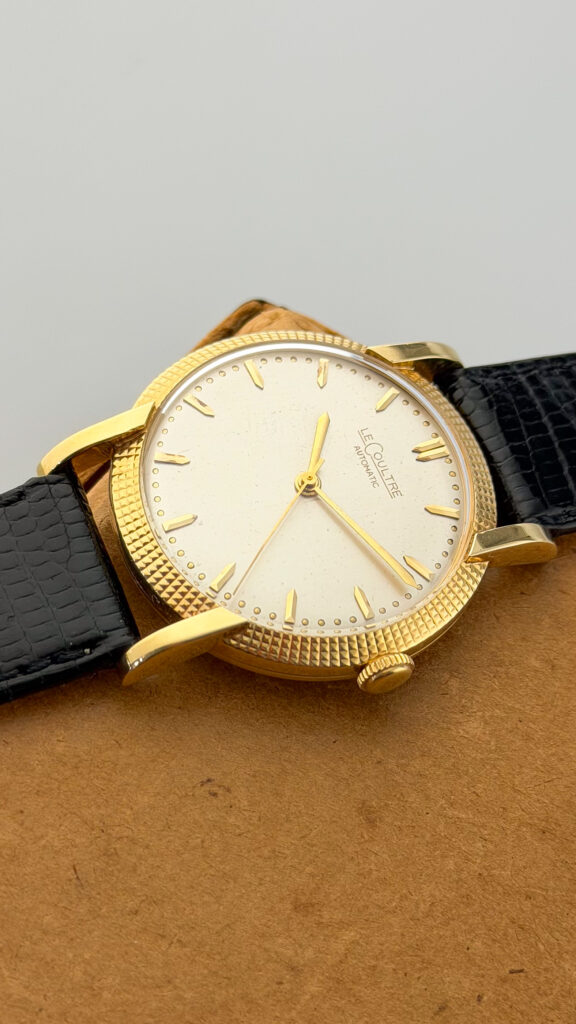
Let’s look at one little bonus, a 1950’s early automatic wristwatch for the American market signed LeCoultre. It is produced in 18k yellow gold which is rare for the American market. It has a beautiful clean dial and fancy lug honeycomb case