This article will focus on a period in the history of the Breguet brand that has often been overshadowed. The period in which the best of french watchmaking was in English hands. The century of vintage Breguet watches under the Brown family.
On Abraham Louis Breguet I will keep things short here. Not because he doesn’t deserve our praise, but because he was already praised by people much brighter than me. Doctor George Daniels himself wrote a book on the art of Breguet. Who is better equipped to review the work of the best watchmaker who has ever lived, then one of the few people that has been able to fully understand and improve upon his legacy?
For those who haven’t read the book (shame on you), let’s take a very quick look at the life of Abraham Louis Breguet. Born in Neuchatel in 1747, he was first introduced to watchmaking at age 11. When his father died, his mother remarried her late husband’s cousin, whose family were already watchmakers with an office in Paris. In 1762 he took an apprenticeship with a watchmaker at Versailles. After this apprenticeship he likely worked for Ferdinand Berthoud or Jean-Antoine Lepine. In addition he studied mathematics. It didn’t take long until he was ready to get married himself. In 1775 he said yes to Cécile Marie-Louise L’Huillier. From this point onwards the world said yes to Abraham Louis Breguet. The marriage to a daughter of a well established Parisian bourgeois family provided him with enough financial love to open a business on his own account in that same year.
In addition to financial support the marriage also opened the doors to the aristocratic and wealthy families that would become his clientele. One of his first pieces was a sophisticated self winding watch to the Duc d’Orléans in 1780 and another one to Marie Antoinette two years later. Then followed a brief period in which almost no finished watches left his workshop. In 1787 he Partnered with Xavier Gide, an established watch dealer that brought additional capital into the company. However the two did not get along and in 1791 their partnership ended. The most important inheritance from this period to Breguet was the archive, which still documents every customer up until modern times.
The French revolution lead Breguet to flea the country as he couldn’t escape from his ties to the aristocracy. He went back to his birth country Switzerland. His exile served his creativity well. He used this period to strengthen ties with local watchmakers and to work on lots of ideas he wanted to execute upon his return to Paris. In 1795 he relaunched the brand. His former clientele had suffered severly from the revolution. Part of them even got executed. However they were quickly replaced by a new group of extremely rich people that came to fruition under the reign of Napoleon. Many of Breguet’s most important creations were made in this period. His network of agents reached all over Europe and was slowly moving outside of Europe too. In the last years of his life his business started to become an incredible success. Please have a look elsewhere to find all the incredible watches brought to life in this period, as they are not the focus of this article.
Breguet was praised as the ‘Horloger de la Marine’ and received many other important titles. He died in 1823. His son had already followed in his fathers footsteps and would continue the company. During his life Abraham Louis Breguet abandoned almost every feature previously associated with the exterior as well as the interior of a watch. His watches were instantly recognizable because of their unique features and fine construction.
The company would be inherited for a couple of generations until Breguet’s great grandson Louis Antoine took over and would become the last custodian of the family to run the Breguet company. He had two sons and a daughter, but they had no interest in continuing the company. Now everything was on the line, would generations of work just be abandoned? Would the company be sold to merge with another brand? Luckily not as the family hired an Englishman called Edward Brown of Clerkenwell to run the Paris based business. He would eventually acquire the brand in 1870. Would it be disaster to have an englishman rule over this french high horology empire?
Breguet’s Brown period
Just as Picasso had its Blue period and Rose period, the Picasso of watchmaking, Breguet, had its Brown period. A full century, from 1870 to 1970, Breguet would be ruled by the Brown family from England. Please note that this period is longer than the previous reign of the Breguet family themselves. How is it possible that this period is overlooked in the brands history. There is very little information to be found about Breguet watches under the Brown family, except for the documented watches produced in this period. Let’s see if we can clarify things a little.
Edward Brown of Clerkenwell had the best intentions with the Breguet brand. He wanted to follow in the family’s footsteps and continue in the direction that Abraham Louis Breguet had set. He would lead the company trough the late 19th century turmoil. After he died in 1895, his sons Edouard and Henry took over. In 1927 Henry’s son Georges took over, who would lead the company until it was eventually sold to the Chaumet brothers. The Brown family was able to guide Breguet trough two world wars. In difficult times that kept a focus on the brands tradition and continued to repare and restore their historic watches, which is something current watch brands should take an example from. A lot of brands underestimate their own heritage which creates a disconnected development.
The Brown’s would put more focus on aviation and marine equipment and would eventually supply the military with the iconic type 20. Here is what Breguet writes on this development. ‘In the early fifties, the French Ministry of Defense drew up specifications with a view to purchasing a large quantity of chronograph wristwatches for its Air Force, to be known as Type 20. Drawing on its experience in this area, Breguet expressed its interest and designed a model that was quickly approved by the authorities. The year was 1954 and the legend of the Type 20 had just begun.
The watches, which were principally delivered to the French Air Force between 1955 and 1959, to the Flight Test Center from 1956 to 1957, and the Naval Air Force in 1960, were provided to pilots as part of their equipment. They remained the property of the French state, which in turn ensured they were kept in good working order until they were unfit for service. The watches were only given personally to aviators in exceptional circumstances. In the face of such success and high demand, the House of Breguet also produced a civilian version named Type XX, which would go on to be enjoyed by several generations of private pilots and those who were simply fans of chronographs.’
This gave the brand a new face in a more industrial and tool based era. Marine chronometers, dashboard and cockpit clocks they were all part of Breguet’s offerings. This aviation relationship reached back long before the 1950’s type 20 though. Breguet was already providing chronograph watches to pilots as early as the 1920’s. We currently have a very intesting pilot chronograph in steel available in collaboration with Vintage Times Amsterdam, that was sold in December 1948.
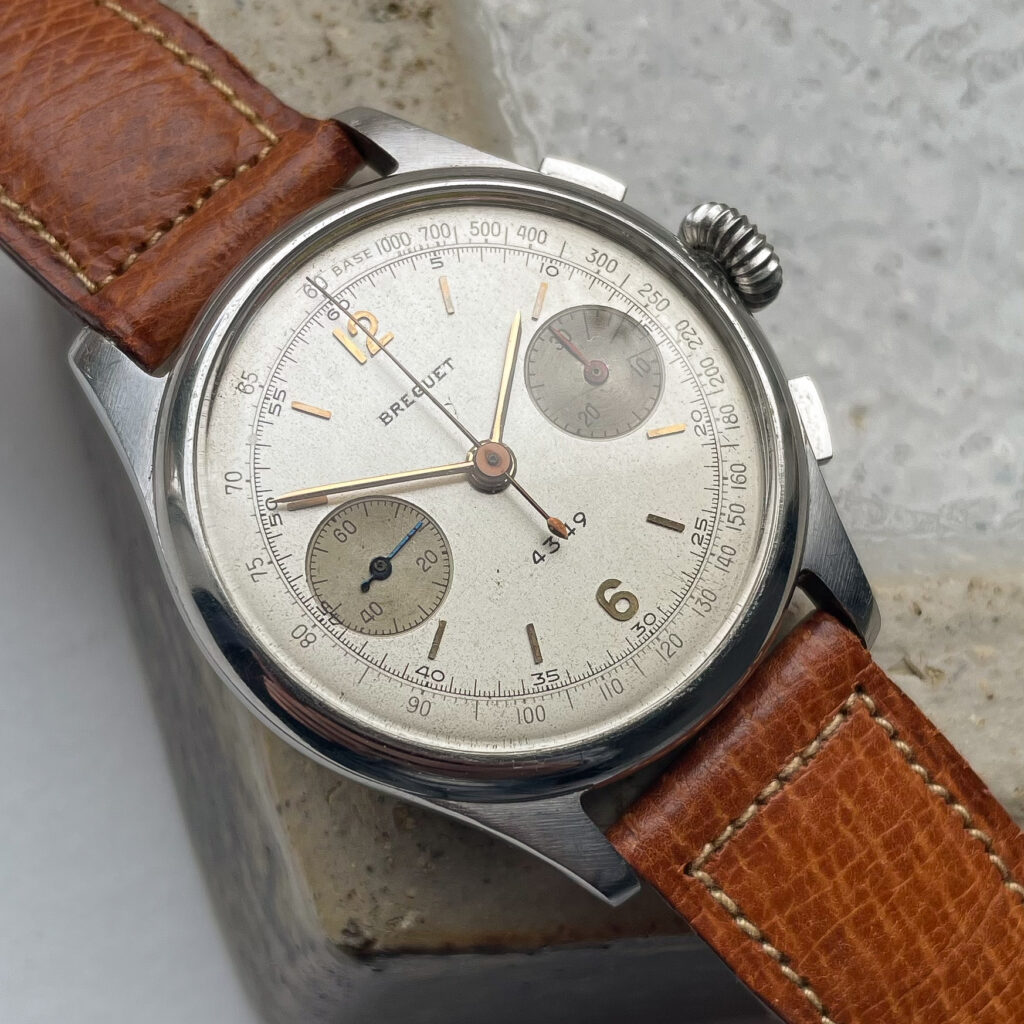
What makes this particular steel chronogaph stand out in the Brown period, is that it sort of marks the transition period of the classical Breguet to the industrial era. This chronograph is produced in steel as opposed to gold. Steel because what use would a pilot have for a precious gold wristwatch? In addition they traded the ornate Breguet typography for a much more suited simplistic font. There is a large so called onion style crown that could be operated easily by the pilot. Contrasting gold numerals, coloured tracks and blued steel hands were all used to improve legibility on the watch. Steel has proven to be an incredibly rare material when it comes to Breguet watches. Only a handfull of them are to be found. Much rarer in fact then with Patek Philippe for example. This watch is an important step towards the french military chronograph that is missing in documentation of Breguet’s history. This is just one example, but it shows that much more is to be discovered in the Brown era. If you would like to know more about this specific steel Breguet chronograph, please reach out here.
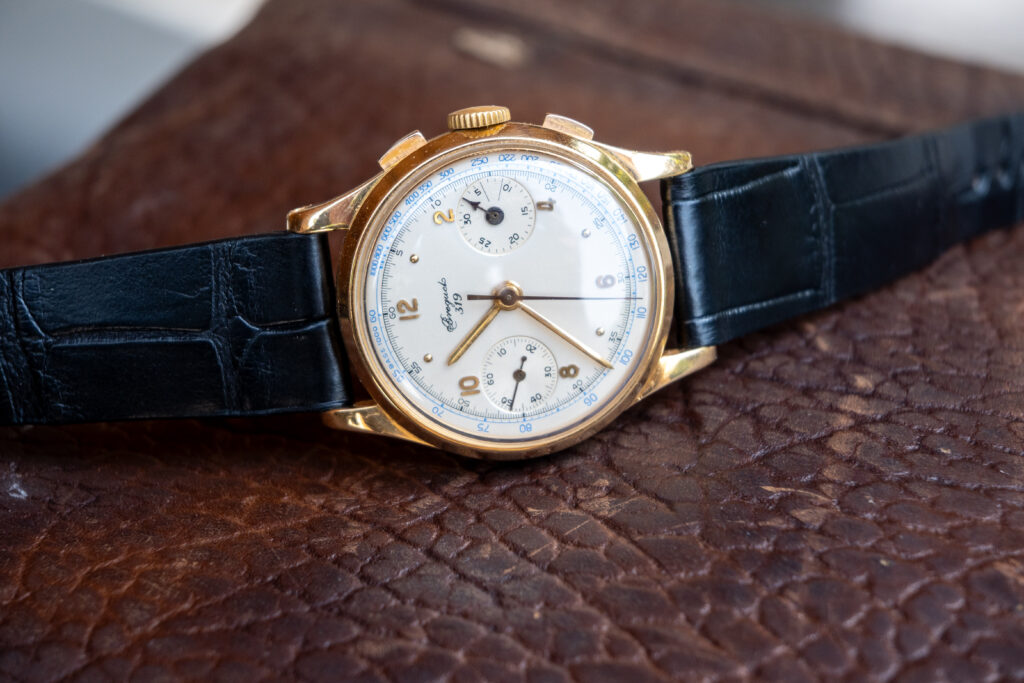
Below we see another chronograph from 1939. You can clearly see the connection between the two watches. The gold chronograph being the more ornate version, while the steel is a more utilitarian example. A very similar example, that shares the typography of our dial is this one sold by Sotheby’s this month in a special auction to celebrate 250 years of Breguet. On the second picture we can see a Breguet chronograph from the 1950’s that is one of the most elegant dress chronographs around in my opinion. This example, the Breguet 319 belongs to Vintage Times Amsterdam. On the third picture below you find chronographs of the same kind listed in the 1991 Antiquorum Breguet auction.


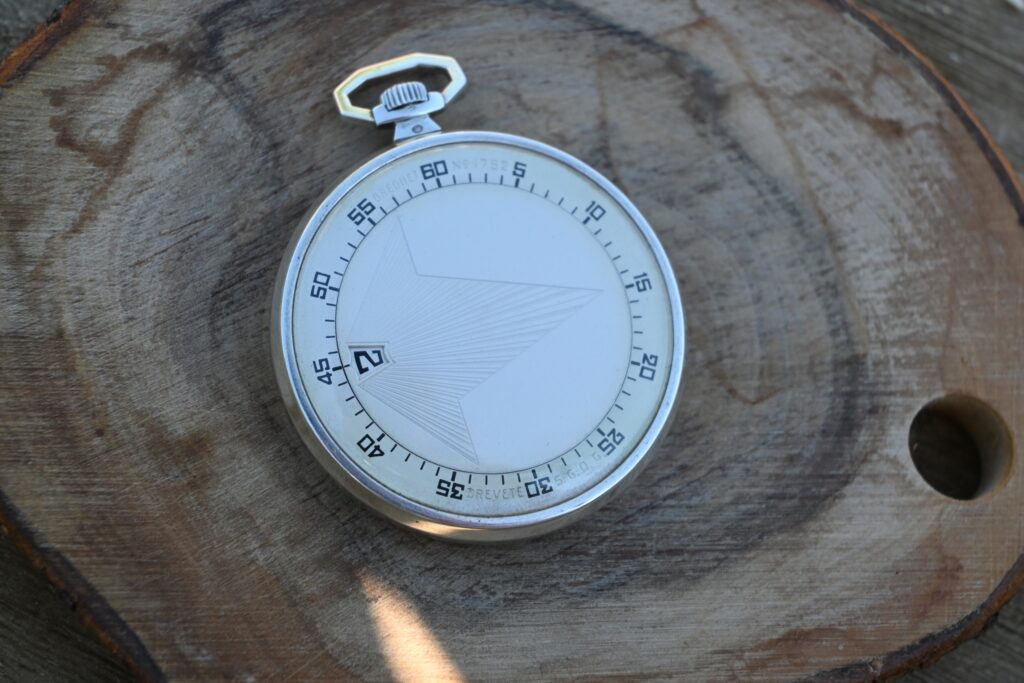
Another important innovation from the Brown era are the rotating dials and jumping hour watches. These sorts of pieces were always evolutionary and not revolutionary. Meaning that they would build upon the brand’s past. These specific innovations were patented in 1928. The invention of this system stems from the mind of Robert-Louis Cart and the patents can often be found on these early pocket watches. Here you can see an example of such a piece which is listed by Vintage Times Amsterdam. In addition we picture two examples from the Antiquorum 1991 Breguet theme sale.

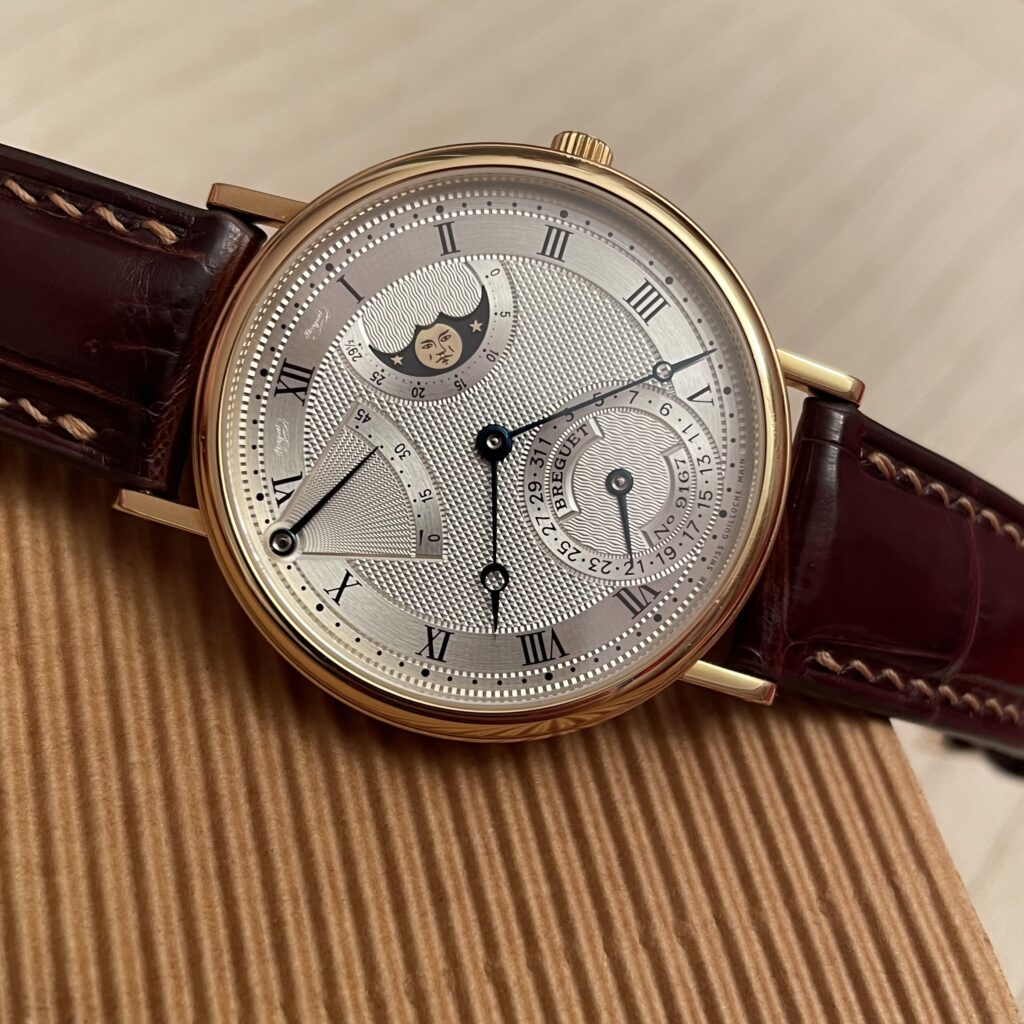
In addition, the big transition from the pocket watch to the wrist watch also started under the Brown reign. As one of few brands, Breguet incorporated the aesthetics from their pocket creations into their wristwatches. What is unusual is that Breguet watches remain instantly recognizable up to today by a design language that goes back to the first pieces the brand has ever created. Whether it is an early 1800’s pocket watch or a 1987 wristwatch, they still share the same DNA. In my opinion it is this sort of restricted innovation that leads watch brands to success. Too much focus on recreating the past and you become irrelevant. Over the last 10 years we have seen a lot of this in the watch market. Every brand recreated its iconic vintage piece with faux patina, oversized case and always they missed what you cannot recreate, charm. Too much innovation without historical context and you become difficult to understand. Breguet has performed this balancing act to perfection over centuries. The Brown family never drastically turned away from the foundation that Abraham Louis Breguet established. At the same time they introduced new complications and product lines to remain relevant. This would be continued by the Chaumet brothers and up to this day in fact. It is an absolute rarity to find a watch brand with such a stable direction.
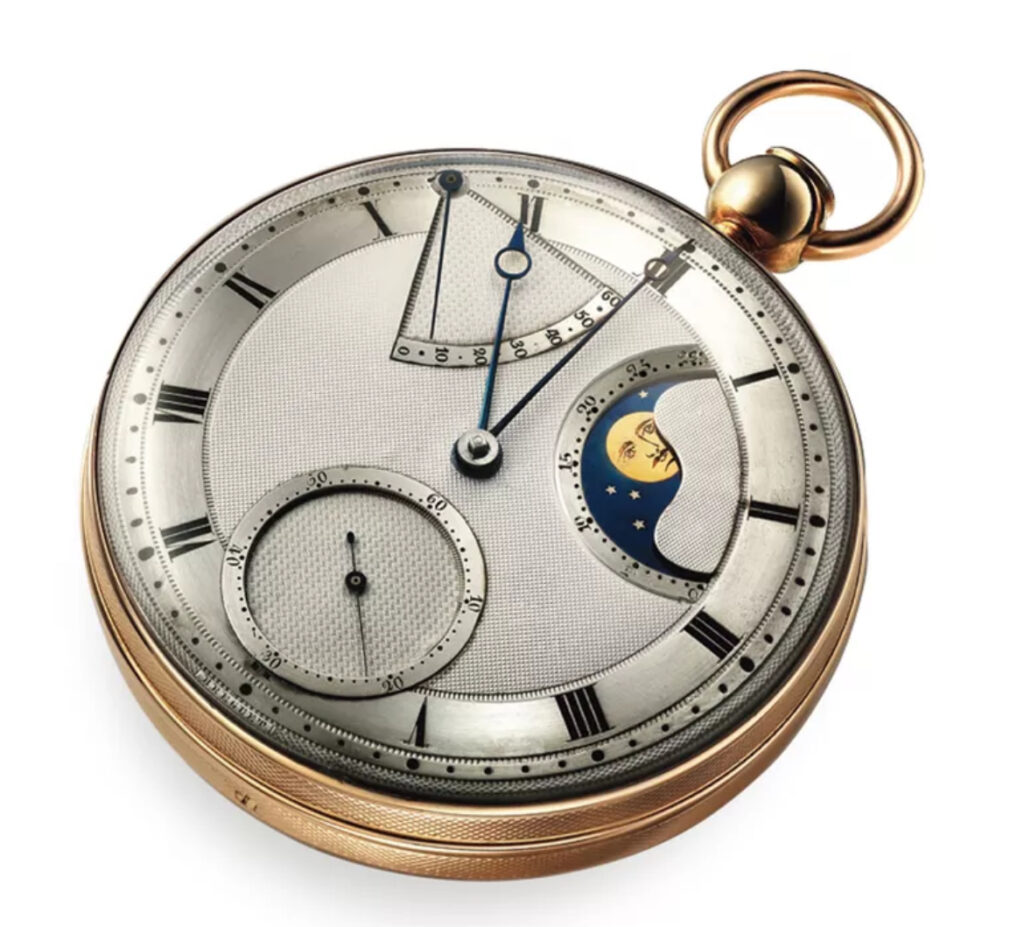
The best way to show what this restricted innovation looked like in the Brown period, we will have a look at some important creations from this era. I don’t want to claim that mine is a serious addition to the literature on the Breguet company under the Brown family, but merely hope it offers some new insights or gets other people to investigate this period. The pieces pictured here come from the important Antiquorum theme sale from 1991. Because of the excellent archive, we can see which watches fall within the Brown period.

Above you see an Astronomical pocket watch, Breguet 4802. It was completed in November 1925. This watch shows that the Brown family did not decide to rest and repeat what was already done. They came up with spectacular pieces again and again. Here we have a quarter-repeating, full calendar, thermometer and independent jumping dead split-seconds with subsidiary 1/5th flying hand. If it takes this many words to describe a watch, you know it’s no joke.

This is watch no. 2752, completed in 1932. After being sold two times before, it eventually ended up with Jean Jacques Guerlain. A man of incredible style and achievements who would not accept anything less than the best. I think we all agree that this pocket watch is the best. Again notice the dial style, which is typical Breguet.

Also from 1932 is Breguet 2795. Made especially for the president of the French automobile club, Le Vicomte de Rohan. As you can see the style is very similar to the piece above.


Above another outstanding pocket watch from 1929. The Breguet 1639. Perpetual Calendar, moon phase, differential equation of time and sunrise/sunset indicator. Or in short, the magic of Breguet.

Here you can see the above mentioned result in the Phillips catalogue


The marine chronometers above show the new directions Breguet was taking under the Brown family. Supplying precision instruments and tools to the marine and airforce. You see the style is different. The ornate and beautiful is traded for simplicity, legibility and precisions. When time is too important too lose, it has to be right.

Above we see this theme continued with the famous airforce chronographs from Breguet, both delivered to the French CEV. There is an entire evolution within this chronograph style that I will not discuss here. But this clearly shows a new direction for the brand under the Brown family.

Above some calendar wristwatches from 1946 and 1963. What is interesting to notice is that the 1946 version shares the same case as the steel chronograph we discussed above. Not surprising as their production is only two years apart.